
Jimmy Stewart welcomes you to the Magic of Movies!
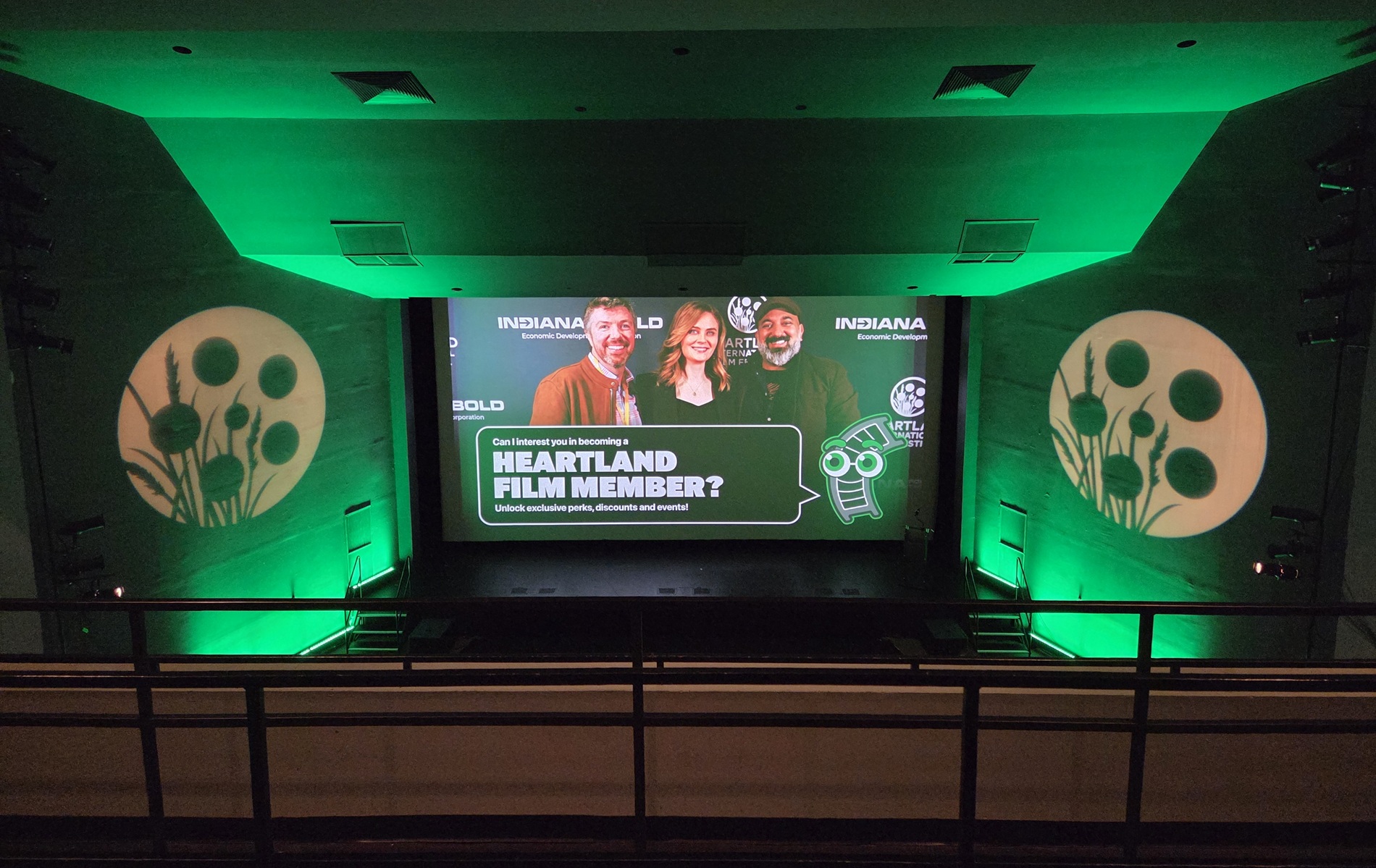
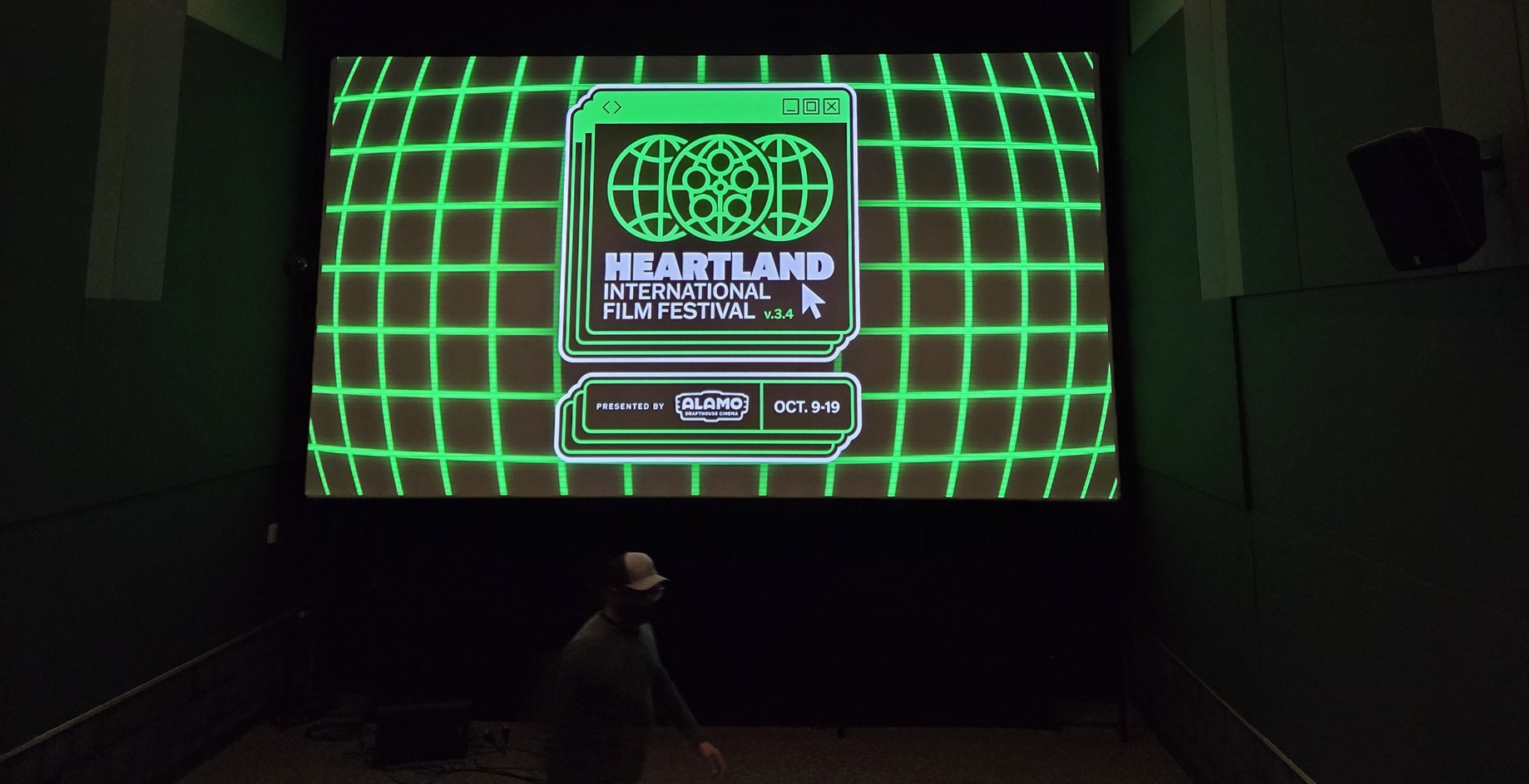
Previously on Midlife Crisis Crossover: since 1992 my hometown of Indianapolis has presented the Heartland International Film Festival, a multi-day, multi-theater celebration of cinema held every October. Local moviegoers have the opportunity to see over a hundred new works in the realms of documentaries, narrative features, shorts, and animation made across multiple continents from myriad points of the human experience. Some participants are on a nationwide tour through the Hollywood festival circuit; others are local productions on shoestring budgets. Projects with household names screen alongside indies with big hopes — sometimes with a cast of unknowns, sometimes with a familiar face or three from pop culture’s past and present.
Heartland’s 35th edition runs October 7-18 and will be my fourth time diving in. I’ve made plans to catch at least six films in all, maybe more if time permits. Some are highly anticipated and might go on to compete at the next Academy Awards, much like last year’s Blue Moon and It Was Just an Accident. Or they’ll be smaller and criminally overlooked, which sadly is how things can go sometimes. (My favorite Heartland 2025 entrant, Egypt’s heartbreaking Oscar submission Happy Birthday, never found a US distributor and is still unavailable to stream here.) Results and fates will vary. Longtime MCC readers know the rule: every film I see in theaters gets its own entry, no matter how big or little. Given the viewing volume and thereby the subsequent writing volume, I might keep these write-ups shorter than usual. (I said MIGHT. Stop looking relieved.)
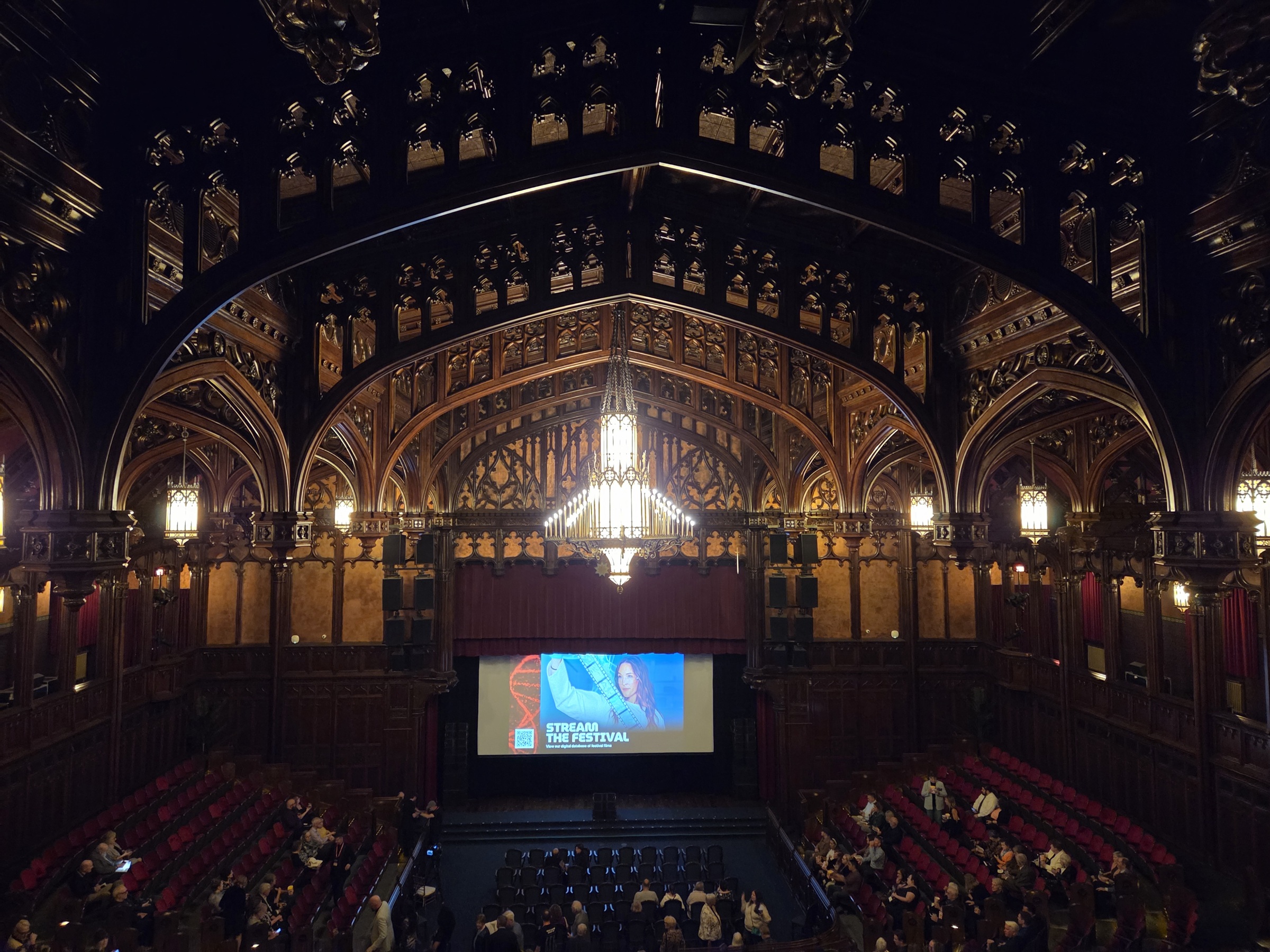
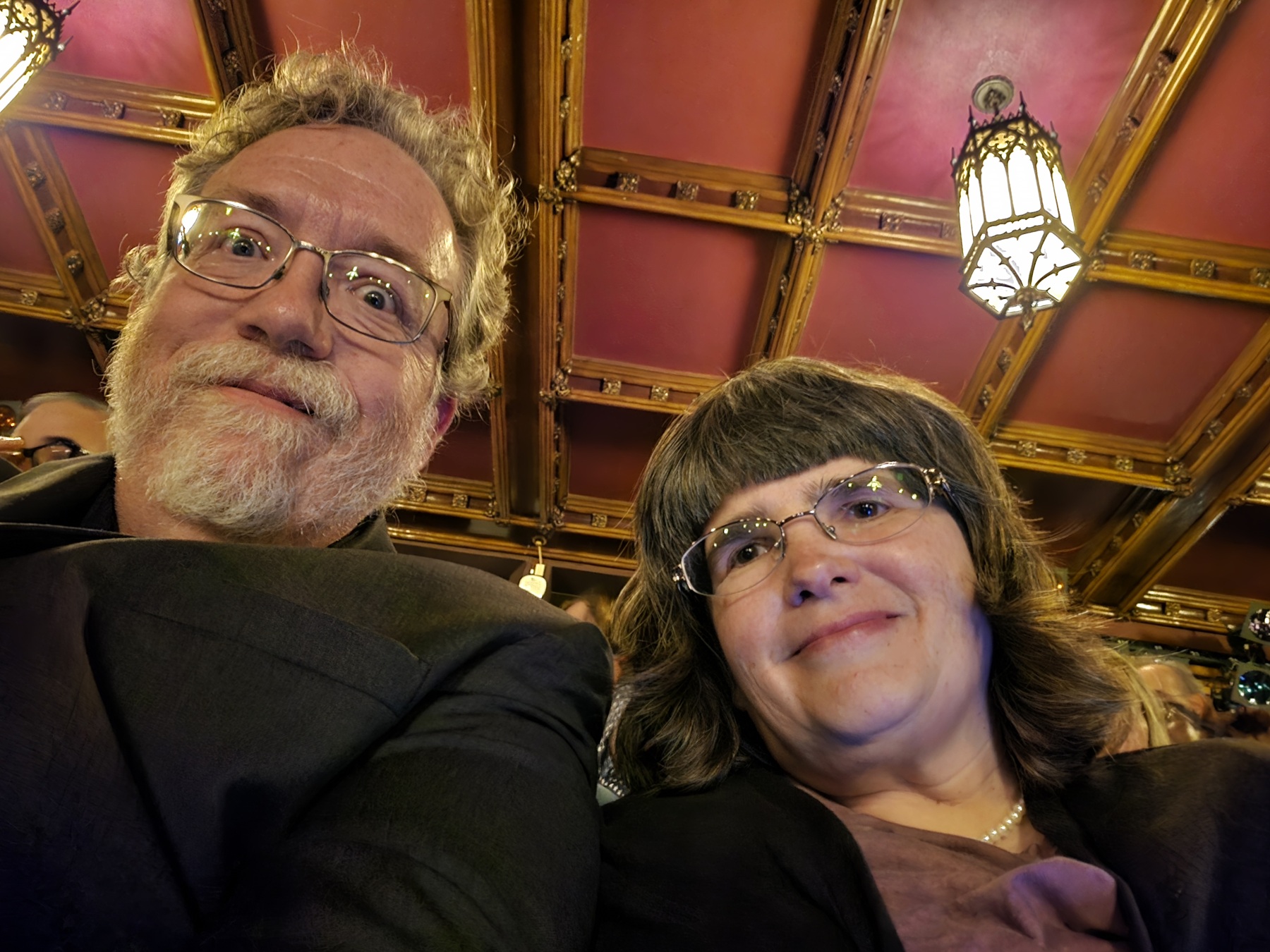
First in line: Heartland proudly presented the sold-out Festival World Premiere of Jimmy — a biopic of legendary actor Jimmy Stewart, focusing on his World War II service and the aftermath. It was a natural fit for Heartland — his family has maintained close ties with them since the late 1990s, even allowing them to name one of their annual awards after him. As one of the festival’s two big opening-night galas, the screening was held downtown at Scottish Rite Cathedral and welcomed cast and crew members for an intro and Q&A afterward. Accompanying me was my wife Anne, who read a Stewart biography not too long ago and was curious to see what they covered. We didn’t take notes during the Q&A, but she did her best to catch a few pics from our long-distance uppermost balcony seats.
The Gist: Rather than cover his entire life, Christian filmmaker Aaron Burns and screenwriter Justin Strawhand limit their scope to a potentially compelling three-act movement with inspiration taken from Stewart’s own diary. A brief montage of his 1930s A-list ascension peaks with his first Oscar for the rom-com The Philadelphia Story and skips his next several films before Stewart gets his draft notice. Descended from a long line of military men, he doesn’t shy away from duty — in fact, he has to persuade everyone around him to let him serve, like a pre-buffing Steve Rogers. None are more stubborn about keeping America’s #1 movie star off the front lines than studio head Louis B. Mayer himself, played here by Seinfeld’s Jason Alexander as a typically snarky Hollywood profiteer, though a tad more benign than other depictions of him (e.g., Arliss Howard’s scathing take in Mank).
The film’s core is Stewart’s airman years — fighting alongside other soldiers skeptical of a Hollywood pretty-boy’s mettle, working his way up the ranks into a command position, doing his part for the war effort and counting down to completing his 20-mission minimum. When The Powers That Be up the quota to 30, Stewart isn’t the only disappointed serviceman struggling to reconcile their emotional exhaustion with their commitment to duty. (Somewhere in the distance, the spirit of Yossarian howls into the void.)
Stewart of course survives the war, but he lost a lot of good men along the way. A hometown hero’s welcome gives him little solace — he’s stricken with regret and remorse after witnessing so much horror firsthand, as one of those who bore the responsibility of sending men to their deaths. As Stewart spirals in the throes of depression and trauma, God opens a door to him toward an unexpected source of catharsis: a little Christmas fable about a guy named George Bailey.
The familiar faces: The film’s most ebullient performance comes from Max Casella (Doogie Howser, The Sopranos) as Frank Capra, Stewart’s old pal who directed some of his most enduring films (Mr. Smith! Mr. Deeds! Best Picture winner You Can’t Take It With You!). Capra’s own wartime film efforts on behalf of the U.S. government are out of scope here; he enters the story with his latest project It’s a Wonderful Life, positioned as Stewart’s possible gateway back to stardom and grace, not necessarily in that order.
Comedian and actual retired Marine officer Rob Riggle (known to us Office fans as the Booze Cruise Captain) is Stewart’s most frequent CO and taskmaster. Neal McDonough (Buck from Band of Brothers! Dum-Dum Dugan! Damien Darhk!) is Stewart’s dad — stern but not hectoring, candidly convinced his son isn’t cut out for the military. The most unexpected words of encouragement come from Christopher McDonald (Hacks, The Iron Giant) as Lionel Barrymore, playing George Bailey’s arch-nemesis Mr. Potter and offering wisdom between takes. In an Easter-egg bit, Karolyn Grimes (the original Zuzu Bailey herself!) is a welcome-wagon representative.
Among the cast members I haven’t seen before: Kara Killmer, a stalwart from NBC’s Chicago-verse, is Stewart’s Concerned Girlfriend, a composite character. Sarah Drew (Daria, Grey’s Anatomy) is Hollywood gossip-monger supreme Hedda Hopper, the closest Jimmy has to a non-Nazi antagonist. Jen Lilley (Days of Our Lives, General Hospital) is briefly his future wife Gloria, their (fictional) meet-cute more of a happy-ending bonus than the beginning of a beautiful relationship. Fellow soldiers include 9-1-1: Lone Star costar Julian Works.

Mr. Smith Goes to War.
The Impressions: The first two-thirds of Jimmy are an old-fashioned intersection of standard-biopic and war-film tropes, comfy enough to feel like the sort of drama Stewart himself might’ve once starred in. Root for Jimmy the earnest recruit as he debates the very system that denies his patriotic fervor! Boo the Hollywood bean-counters who offer to write him a draft-dodging hall pass for their own material gain! Smile as he gets in a few self-deprecating chuckles, wins over the other fellows and finds romance overseas! Gasp as we’re reminded yet again that War Is Hell and it’s an intense physical experience that forges men’s strongest bonds!
Jaded viewers may lose their composure in a few spots. Strings and cues from yesteryear prompt our correct responses, including at least one Heavenly Choir™ who hit their mark at a predictable crisis point. When one young copilot cheerfully tells Jimmy about the family and career waiting for him back home, you can practically smell the Grim Reaper’s brimstone cologne as he waits for his cue in the wings (no pun intended). Our glimpses of aerial combat are limited mostly to Jimmy’s cockpit vantage point, where much of the dialogue is as muffled as Tom Hardy’s Dunkirk segments; when select scenes of WWII EXPLOSIONS do crisscross the full-spread widescreen, the canvas toward the horizon is sometimes so glossy that I silently pleaded to myself, “Please tell me they didn’t use AI, please tell me they didn’t use AI.” Dialogue aside, the sound effects were suitably, bombastically immersive as Our Heroes are surrounded on every side by enemy aircraft, fully palpable through the Cathedral’s amazing sound system. (One rain-swept scene sounded so real, I looked to make sure it wasn’t 4DX and the front rows far below us weren’t getting doused by sprinklers.)
Postwar is when Jimmy ventures into underpopulated territory, where few 1940s films would’ve dared, largely because American society hadn’t yet grasped the psychological depths of “shell shock”, a.k.a. “combat fatigue”, a.k.a. PTSD. Near the end of his tour, Jimmy gives his joes one last stirring rah-rah speech that he’s used to screenwriters writing for him; after the ensuing confrontation doesn’t quite go how anyone had hoped, he returns home heartsick, directionless, and riddled with survivor’s guilt on more than one level. This, Jimmy contends, was the darkest point in his life. Who knows what would’ve happened to him if Frank Capra hadn’t come along at that moment with the perfect opportunity…not just to get back into Hollywood, but to find healing with the help of a friend.
Slowly, subtly, Burns reveals the evangelical angle of the tale that’s been low-key seeded here and there. Though a freshly uniformed Stewart tells someone early on, “I’m not a praying man,” he doesn’t decline the gift of a Psalms booklet, which he would carry throughout the war and keep with him till his homefront return. Scenes on the set of It’s a Wonderful Life lack in aw-shucks camaraderie; Stewart is clearly broken, the beloved big-screen Everyman unnerving his costars. This culminates in the filming of the scene where George, his spirit similarly shattered, sits alone at that Bedford Falls bar and turns his plaintive pleas toward God. Through take after take, Capra soon realizes Stewart might not be acting.
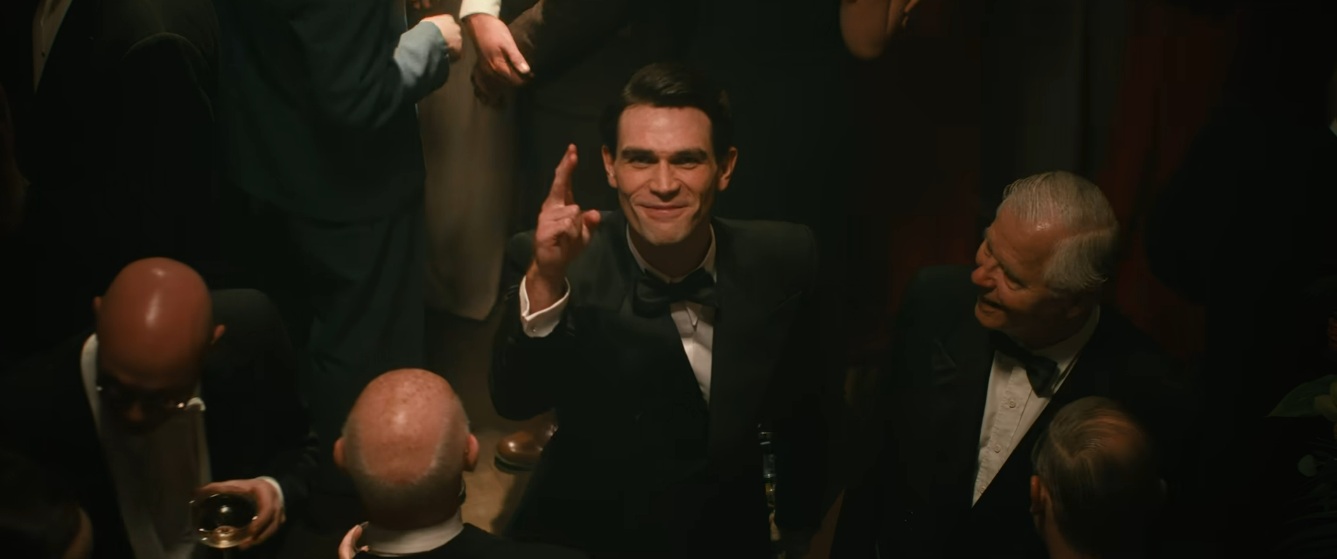
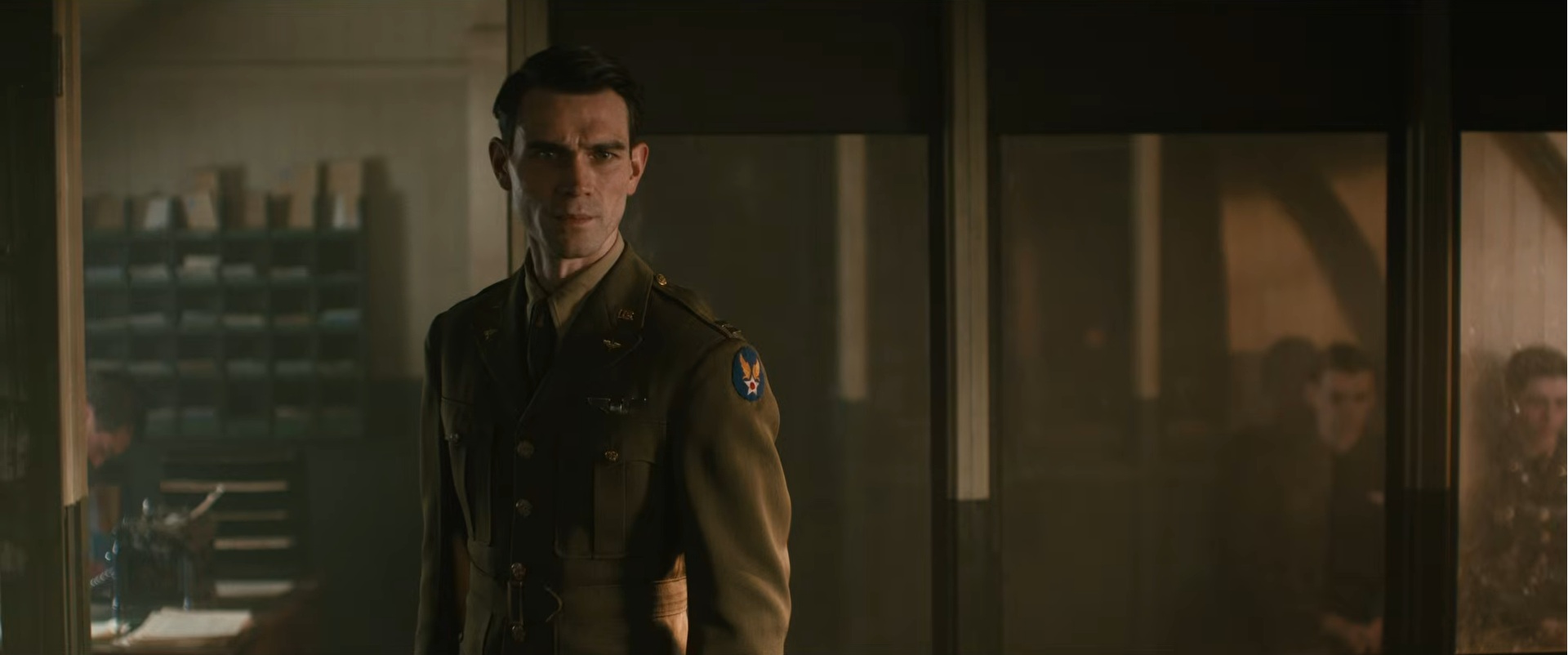
In those most vulnerable moments, KJ Apa’s performance reaches its zenith and finds the humanity that connects George to Jimmy, and Jimmy to the audience. He nails an impeccable replication of Stewart’s distinctly wobbly-reedy voice without sounding like a demeaning SNL impression — at turns sincere, congenial, a bit square, and eventually just as wounded and dark-edged as some of the men he’d go on to play (cf. The Man Who Shot Liberty Valance, Winchester ’73, or name your own latter-day faves). I’ve never seen an episode of Riverdale (the reviews lost me before the get-go with the phrase “Archie sleeps with Miss Grundy”), so I didn’t have any preconceptions about him going in. For me, at least, he was Stewart through and through.
Setting aside the epilogue mostly elides the part where Wonderful Life kindasorta flopped in its initial release (blink and you’ll miss the fate of Capra’s short-lived Liberty Films). Nevertheless, if you’re yearning for “the kind of films they used to make”, Jimmy should fit the bill for his longtime fans and maybe a few youngsters who missed that age of cinema. Fair warning: Jimmy is so unabashedly sentimental that even cynicism poster-model Hedda Hopper gets a little misty-eyed at the end.
The end credits? The Jimmy end credits from beginning to end are accompanied by archival photos and videos from throughout Stewart’s lifetime in random order — home movies, one of his Tonight Show appearances, his 1985 Academy Awards acceptance speech for his Honorary Oscar, and so on. The fine print at the very end thanks the troops and veterans out there, and quotes from (I think?) Psalms 118:6, which reads in the NIV, “The Lord is with me; I will not be afraid. What can mere mortals do to me?”
…
…as I said, we didn’t take notes during the Q&A afterward, so I’ve no intention and insufficient material for lengthening this entry too much beyond a few extra notes:
- Despite living in Indy all our lives, this was our first time inside the Scottish Rite Cathedral. We wish we’d had more time to explore, but driving downtown at the end of rush hour and searching the Cathedral’s lots for a space took more time than we’d hoped.
- We had the brief pleasure of sharing an elevator with one of the makers of Too Soon, another of this year’s Heartland films that’s also available for virtual streaming, who proudly plugged it to all of us before she exited on the second floor. Consider it noted!
- If you’re above a certain girth, ordering tickets online, and find the venue’s site warning you that your selected seats have “LIMITED LEG ROOM” in that exact verbiage, do not buy those seats or else you will suffer. Oh, how you’ll suffer. Through the entire event. Seriously.
- We didn’t pay extra for the afterparty or stick around for red-carpet interactions with the cast because we both had to work the next morning.
You can see professional photos of the shindig at Heartland’s own site or posted through local media socials. Here’s what we amateur enthusiasts (well, 90% Anne) managed to capture from the opposite end of the cathedral during our evening. Enjoy!

The pre-show view from our seats.

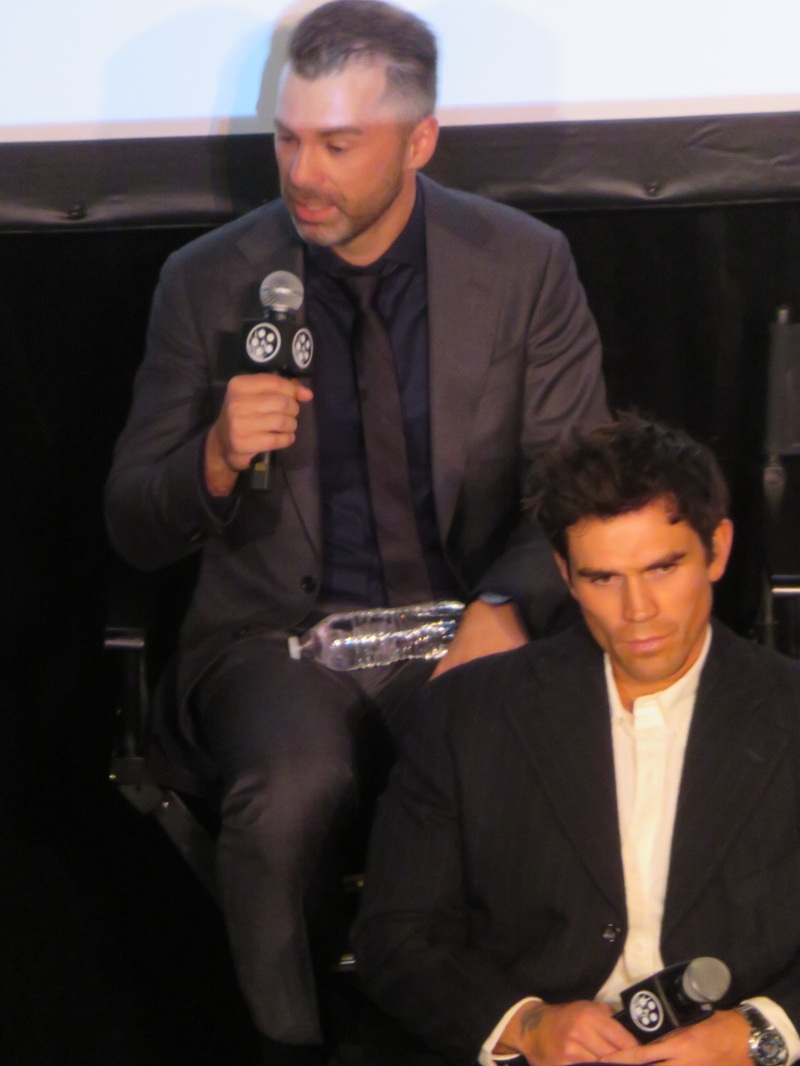
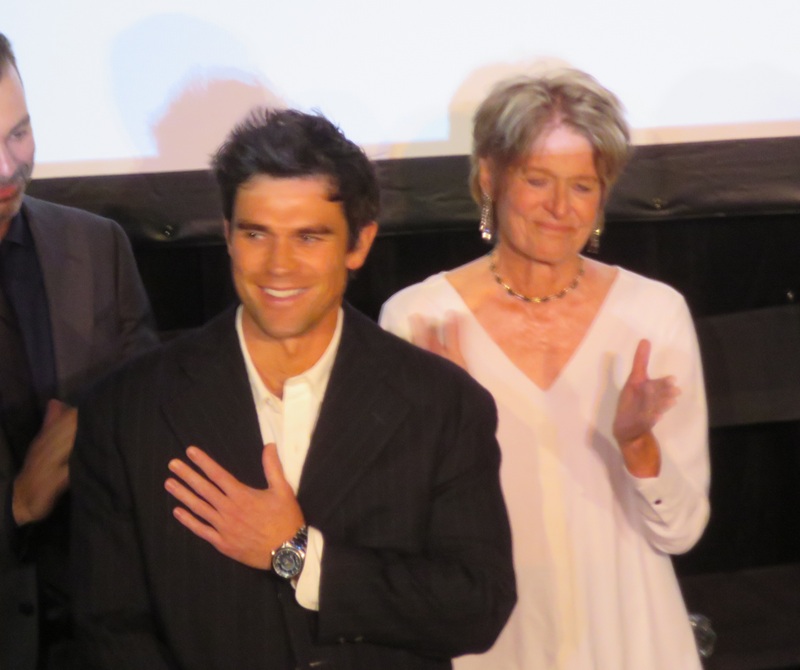
Director/producer Aaron Burns and star KJ Apa.

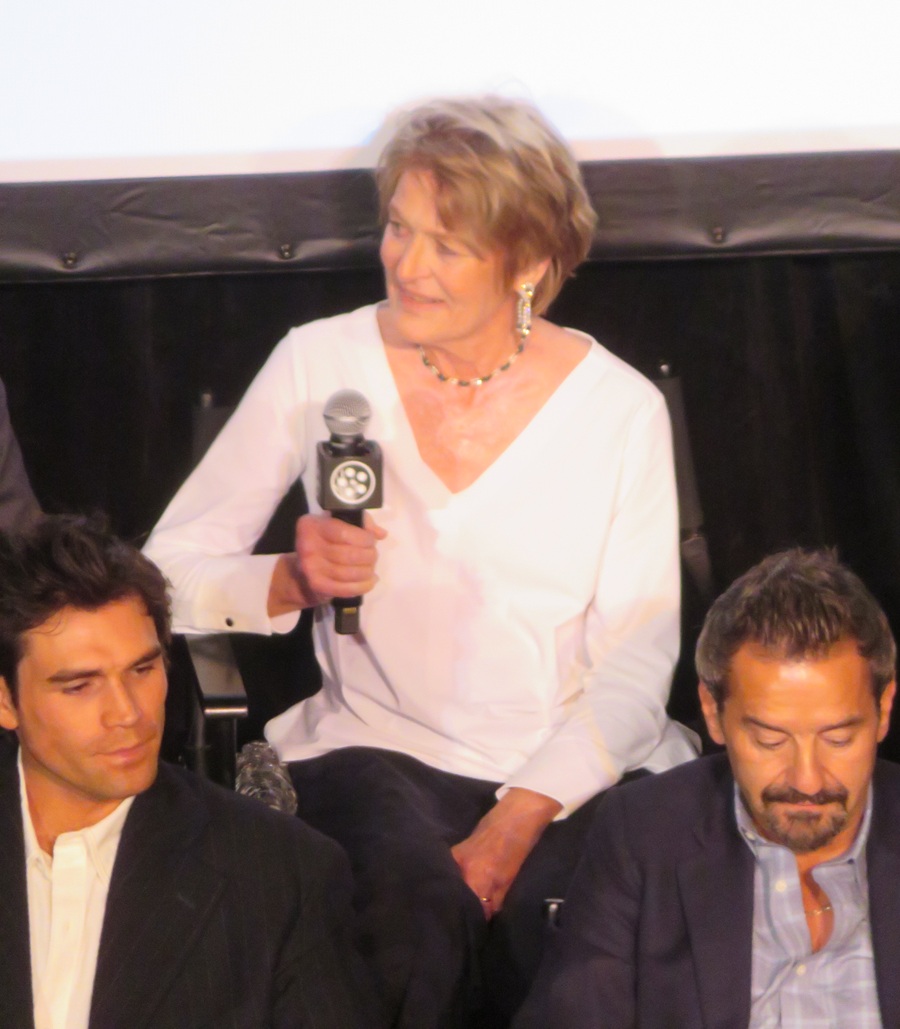
Kelly Stewart-Harcourt, daughter of James “Jimmy” Stewart.

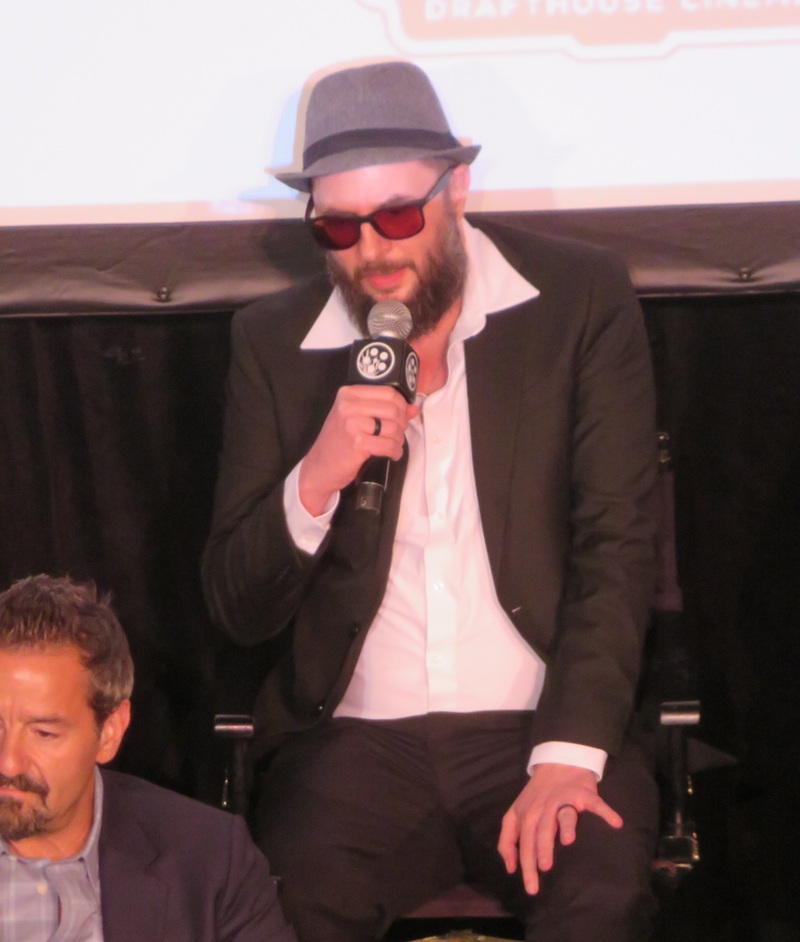
Screenwriter Justin Strawhand, who also worked with Burns on his previous film Birthright Outlaw.

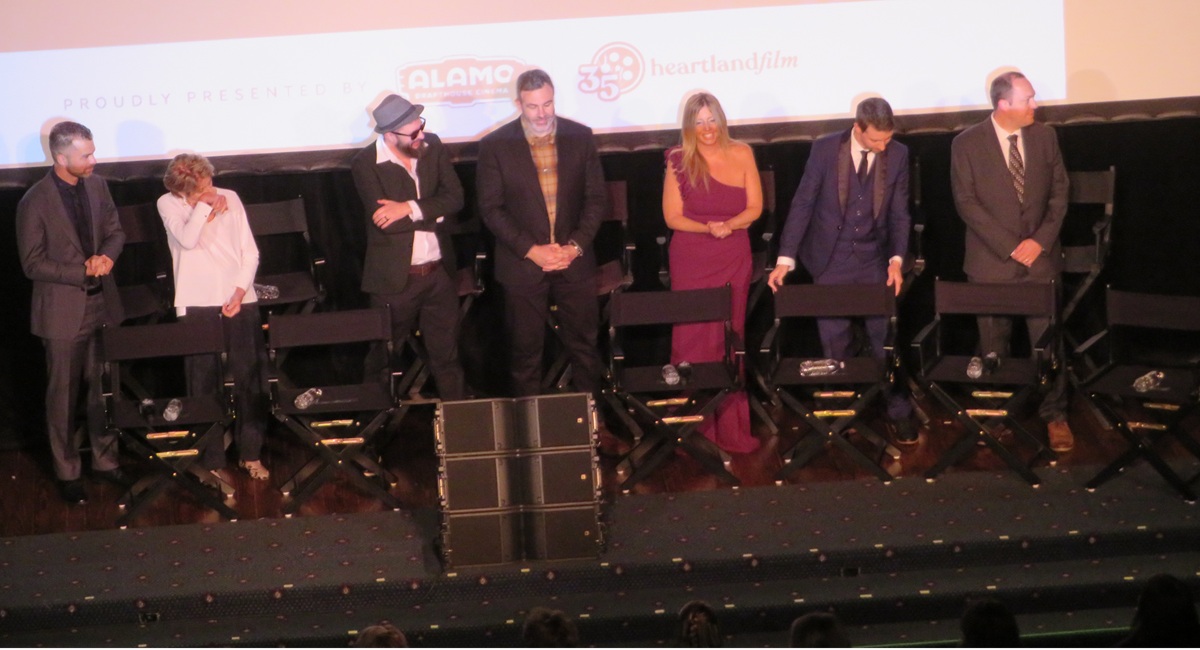
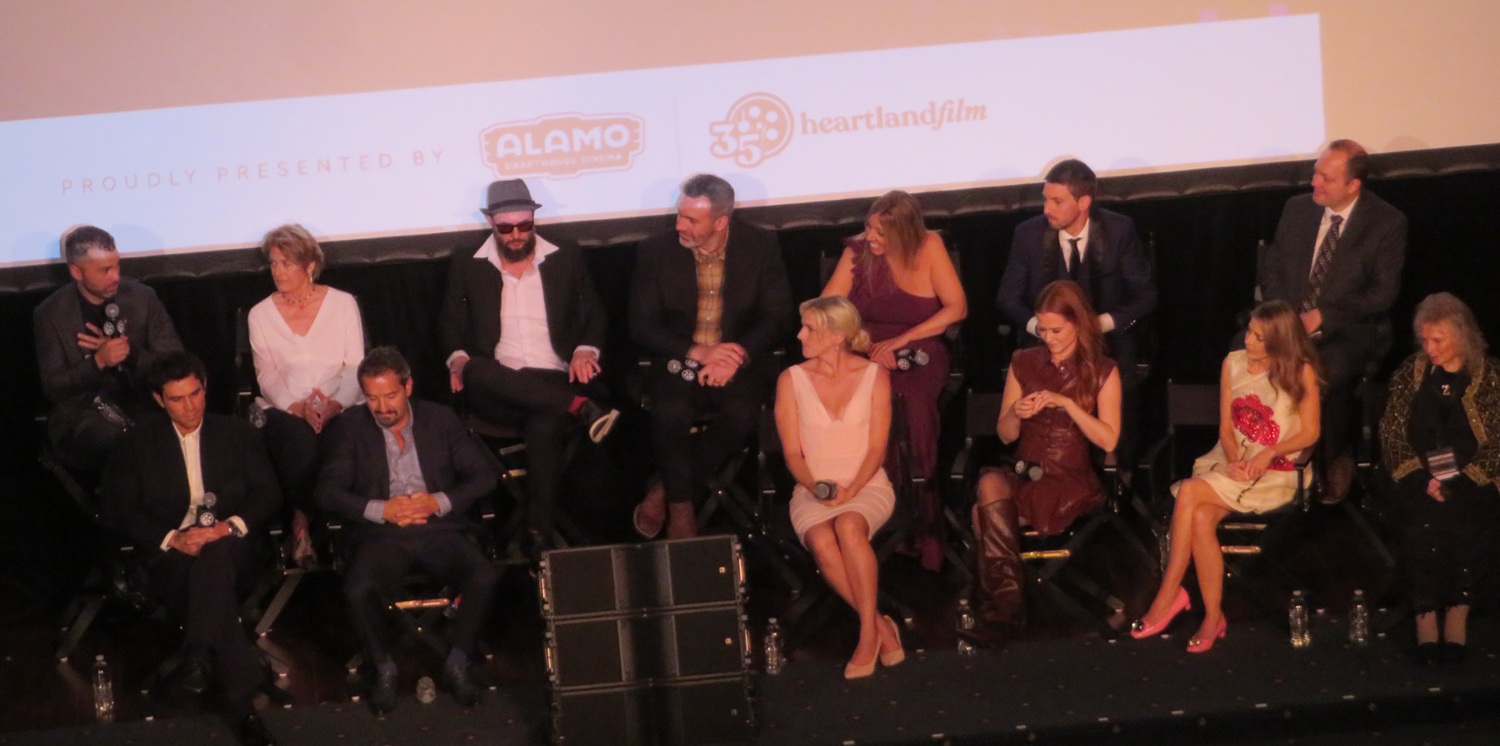
The entire Q&A back row. Also pictured, continuing left to right: composer Grant Fonda and producers Angela Sullivan, Jack McClintock and David Cook.

The full Q&A roster. Moving to the front row with…

…our star KJ Apa and, once again, Kelly Stewart-Harcourt.

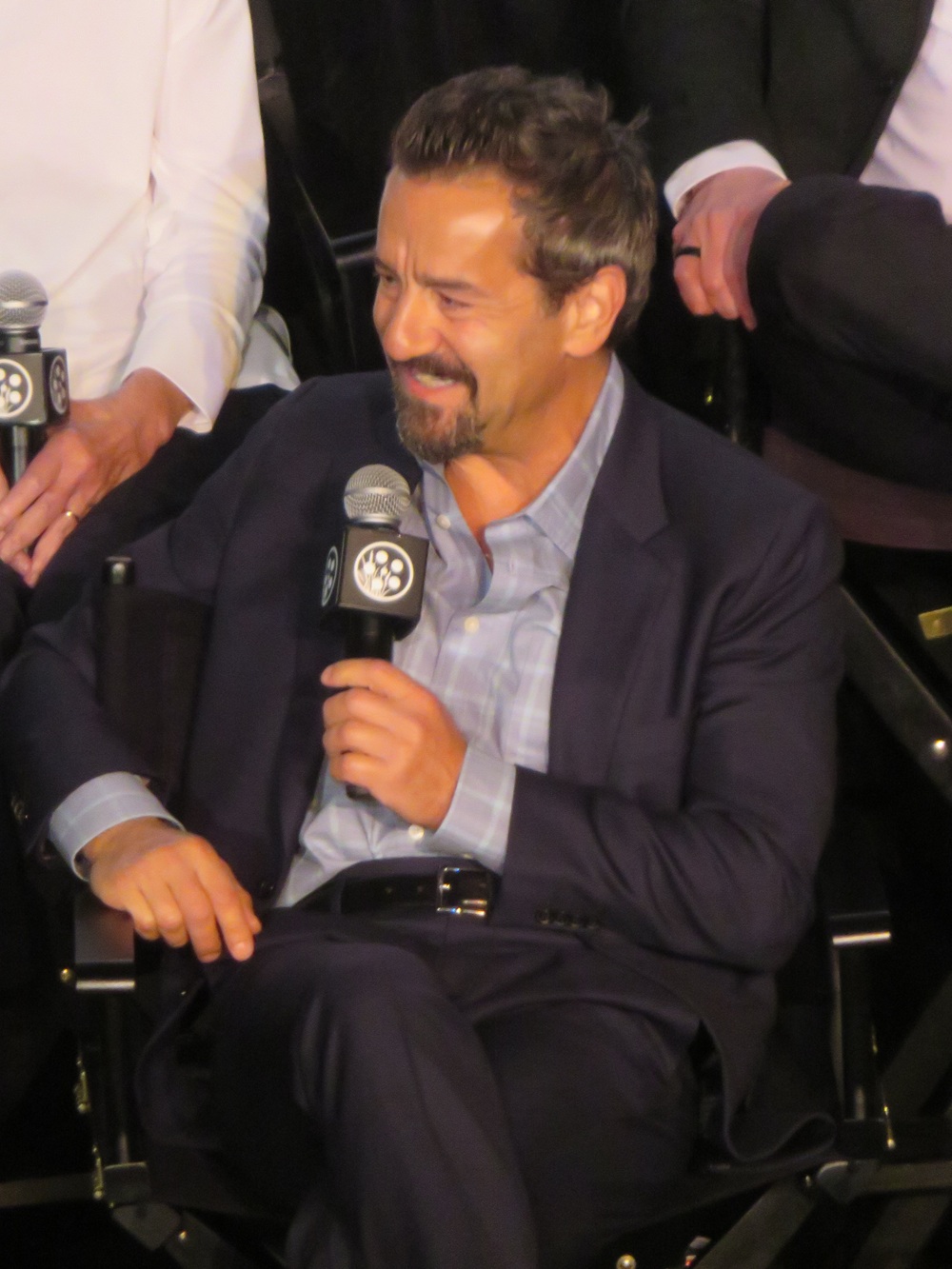
Max Casella, teen actor no more! I loved his version of Frank Capra.

Kara Killner, who plays Jimmy’s wartime love Lady Julia.

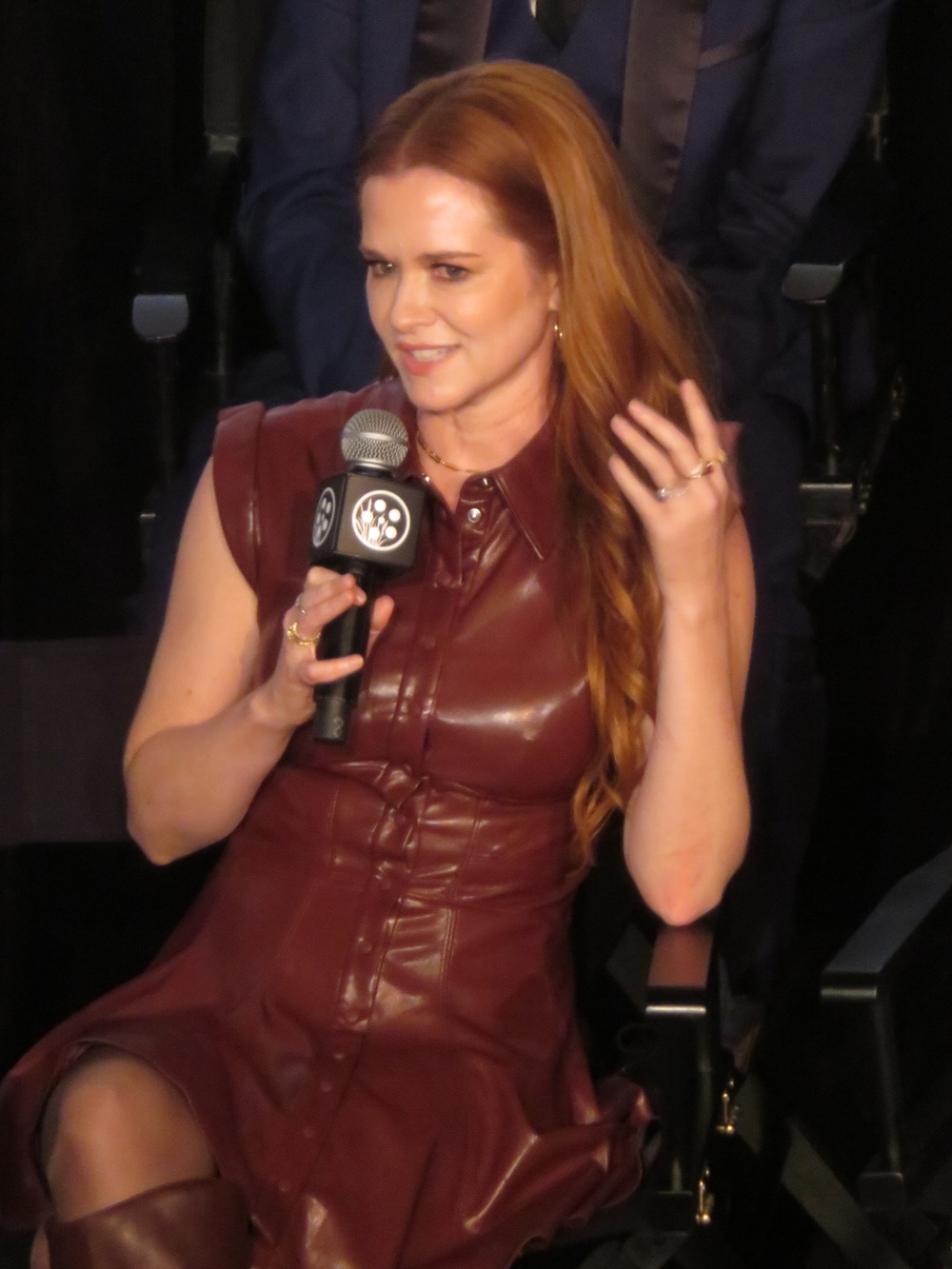
Sarah Drew, a.k.a. Jimmy’s nemesis Hedda Hopper. She also starred in Birthright Outlaw, and I didn’t realize she was Sal Romano’s poor wife on Mad Men, so I have seen her before.

Jen Lilley, who plays the future Gloria Stewart. My coworkers who love Hallmark movies might’ve seen her in a few of those.

Jen Lilley again, because I couldn’t decide which photo to use.

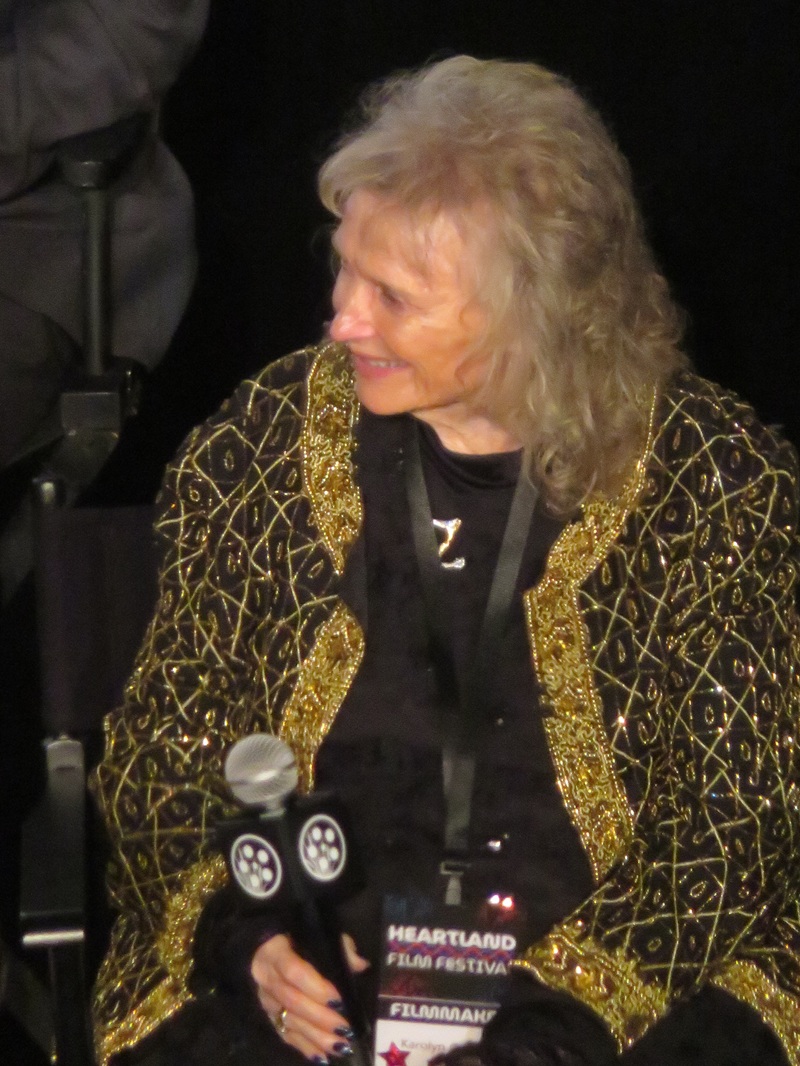
Karolyn Grimes! We had the pleasure of meeting her years ago at Indy’s Christmas Gift & Hobby Show.

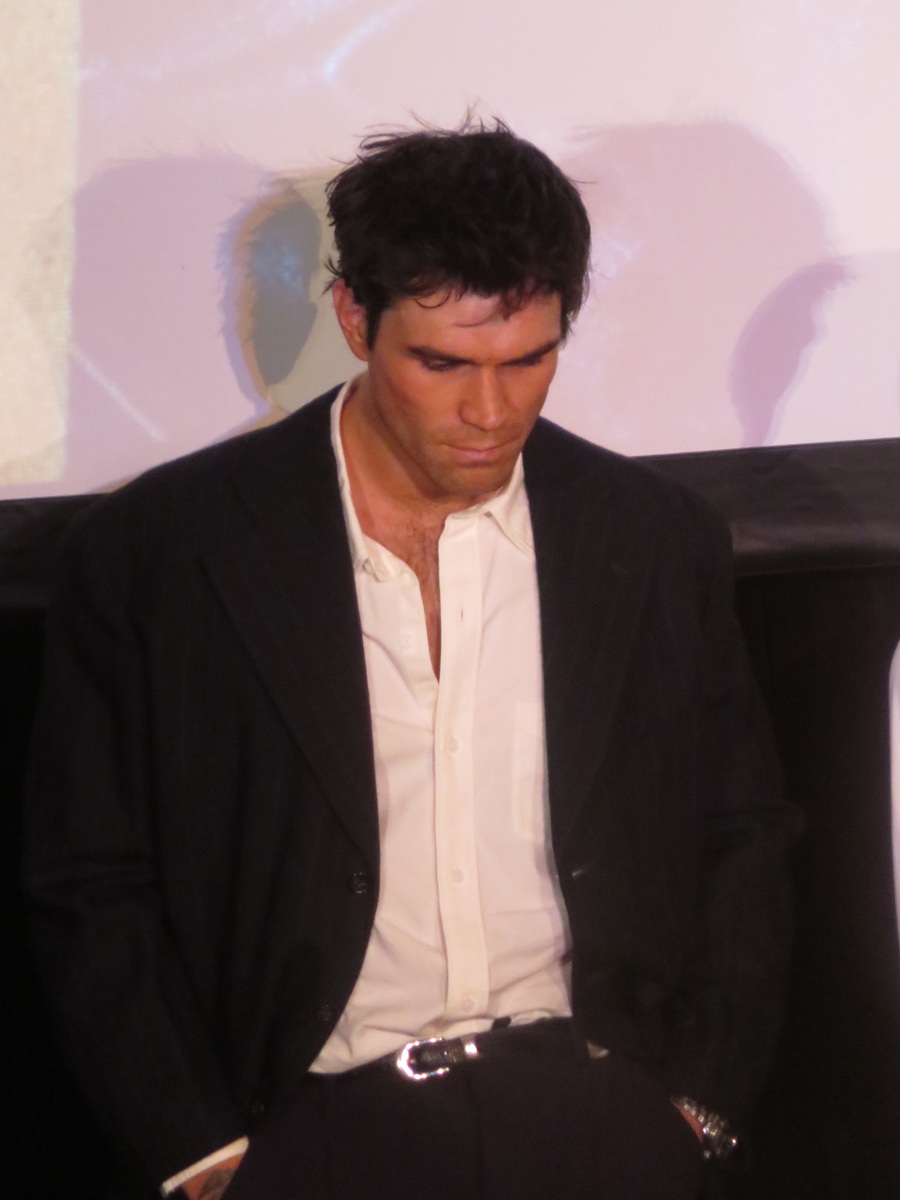
Our KJ Apa pics mostly got him in sterner-looking moments. This one might best capture his version of Jimmy Stewart.
Heartland Film Festival 2025: “Blue Moon”

Super-Villain Team-Up presents Moriarty and The Grabber!
Previously on Midlife Crisis Crossover:
It’s that time again! Since 1992 my hometown of Indianapolis has presented the Heartland International Film Festival, a multi-day, multi-theater celebration of cinema held every October. Local moviegoers have the opportunity to see over a hundred new works in the realms of documentaries, narrative features, shorts, and animation made across multiple continents from myriad points of the human experience. Some participants stop in Indy on their grand tour of Hollywood’s festival circuit; some are local productions on shoestring budgets; and a wide spectrum of claims are staked in the innumerable niches between, projects with well-known actors screening alongside indies with enormous hearts.This’ll be my third year diving in and seeing more than just a single entrant. Heartland’s 34th edition runs October 9-19, for which I’ve made plans to catch at least six films in all (Lord willing) — maybe more if time permits…
Next up is Blue Moon, the twelfth film I’ve seen by prolific director Richard Linklater. His last joint, the true-story dramedy Hit Man, was among my favorites last year. Though his subjects vary wildly from one to the next, his films and their ensembles always have their laid-back charms, so invitingly that you don’t feel time passing because you’re enjoying the conversations so much…even when the loudest guy in the room is blissfully unaware that everyone else is aware of his problems.
One of two entertainment-history films that Linklater has coming out this year (Netflix will drop Nouvelle Vague on November 14th), Blue Moon reunites him with screenwriter Robert Kaplow, a New Jersey professor who also wrote Me and Orson Welles. Both films aren’t all-encompassing biopics trapped within the formula, but rather short stories within a limited time frame — each a concise yet emotionally comprehensive portrait of the essence of a given artist, and not always at their best.
Blue Moon stars Ethan Hawke as Lorenz Hart, one-half of the renowned songwriting team Rodgers and Hart, known for such hits as “Isn’t It Romantic?”, “The Lady Is a Tramp”, “My Funny Valentine”, and other “standards”, as well as such musicals as A Connecticut Yankee, Pal Joey, and a couple dozen others that haven’t been revived since 1950 and none of us talk about anymore, not even our own grandparents. As Hart’s alcoholism and other problems got in the way, Richard Rodgers parted ways with him and found a new creative partner in Oscar Hammerstein II, whose preceding collaborations had included Show Boat and a few lesser others. (I’ve seen the 1936 version, though no one warned me about the group Blackface number.) The team of Rodgers and Hammerstein would achieve legendary status with such hits as The Sound of Music, The King and I, South Pacific, Carousel, and their first team-up, Oklahoma!
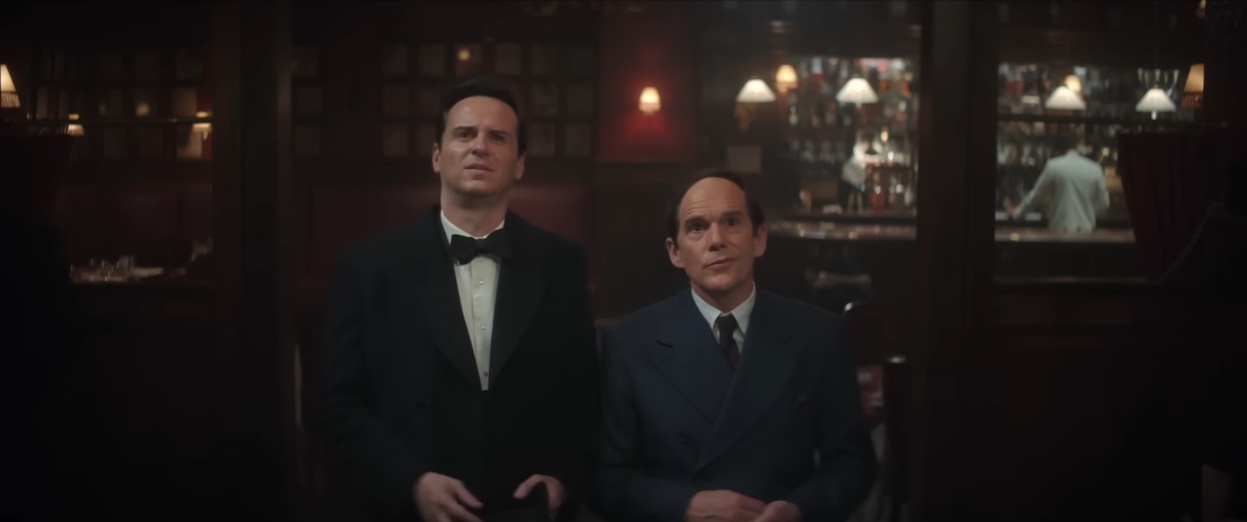
The latter is most germane here, as Blue Moon takes place on its opening night of March 31, 1943, and unfolds almost entirely at the legendary Sardi’s, that storied bar down the street with all its walls covered in famous caricatures. After leaving the theater early in contempt, the disenfranchised Hart retreats to the bar while it’s still mostly empty and tries to entertain a captive audience and maybe sneak the occasional drink, over the objections of Bobby Cannavale (Stepdad Cop from the Ant-Man trilogy) as Eddie the bartender, who knows him all too well and has surely seen Hart at his worst, possibly more than a few times. After the show they’re joined by the duo and their entourage: Andrew Scott (Sherlock, Ripley) is the gentlemanly Rodgers, who’s accepting kudos from all comers while Hart’s insistent on bending his ear; Simon Delaney (The Conjuring 2, The Woman in the Wall) is Hammerstein, humbled by this great success and maybe a little curious what’s going on across the room between Rodgers and Hart.
As Hart thinks himself the center of his own universe (digressing into a fun exchange with Eddie about how we’re all just extras in each other’s main-character lives), so is Hawke’s flamboyant performance the film’s centerpiece. Now in his 50s (only a year older than me!), he’s developed a fascinating specialty of playing unreliable protagonists who love the sound of their own voice more than anyone else around them does. See also: late-stage Jesse in Before Midnight, his serial killer in The Black Phone, his Moon Knight super-villain, muckraking gadfly Lee Raybon in FX’s great Sooner-noir series The Lowdown, et al. Hawke also has to deal with some technical challenges as Linklater pulls some Lord of the Rings trickery to depict Hart’s five-foot stature. It can be distracting at times, and some five-foot viewers could feel a tad demeaned, but Hawke’s eloquent swagger recaptures our gaze and reminds us that Hart had bigger issues than undertallness.
Linklater and his crew have a ball reenacting the 1940s visually and sonically, as Sardi’s pianist (Jonah Lees, a LuthorCorp minion in the new Superman) treats us to some of Hart’s greatest hits as well as a few other big names. (Cohan! Berlin! Kern! Gershwin!) Like a lounge lizard in his element, Hart holds court on his ex-coworker’s “cornpone” new show (he hates hates HATES the exclamation point), the best and worst lines in Casablanca, and his prediction that the new duo’s reliance on sentimentality and sincerity will go on to tremendous success, though he refuses to be happy about it (sometimes he’ll fake it, as one does). He bloviates on pop culture of the day like an internet blowhard six decades ahead of his time, flexing his vocabulary and wit to anyone who’ll pay attention, whether they get the joke or not (e.g., some self-amusing cringe inverting “indefatigable” as its punchline).
Unlike the last film about Rodgers and Hart, 1948’s Words and Music, Blue Moon doesn’t tiptoe around Hart’s open-secret sexuality. They avoid most cliches and acknowledge — or at least, Hart himself proclaims with a Jack Harkness impishness — that his desires weren’t always easy for ordinary onlookers to pin down. That’s especially evident when a special friend drops by: Margaret Qualley (The Substance, Poor Things) plays his 20-year-old protege Elizabeth Weiland, who comports herself as the sort of looker who’d stop any 1940s movie dead in its tracks while all the other characters fawn wide-eyed over her. (Kaplow based his screenplay, which was years in the making, on actual letters between the two.) As if his breakup with Rodgers weren’t enough to cope with, he becomes far more aware of his own fragility as their chats reveal he might be overestimating the state of his relationship with her.
Hart’s charisma notwithstanding, it isn’t long before Hawke and Linklater start revealing the flaws in his erudite armor, including but not limited to the irony of him decrying plays with old-fashioned boy-gets-girl endings while floundering in his own love triangle. As an increasingly desperate Hart chokes on flop-sweat while pitching new projects to Rodgers, it’s telling that his favorite idea for their next big collab is a scathing satire of Broadway musicals, the very medium in which Rodgers has just achieved a huge success. As the straight-man foil, Scott excels with a necessarily more responsive performance: Rodgers maintains his composure and resists the urge to blow up in public on his big night, to smack Hart down with a Moriarty-esque “I WILL BURN YOU” tirade to chase him off, but you can practically feel him screaming on the inside.
Then again, Rodgers’ inner scream will soon fade as his big night of nonstop acclaim goes on. Hart, on the other hand, has but the patronizing camaraderie of those few still around him, drowned out by the inarticulate gasps of dawning irrelevance on the inside. Thus Blue Moon sets, an engaging tragedy about a has-been who’s trying to keep his own party going for as long as he can while his Broadway spotlight dims away.
…
Meanwhile in the customary MCC film breakdowns:
Hey, look, it’s that one actor!: Patrick Kennedy (Downton Abbey, Dept. Q) is the essayist E.B. White, a fellow bar patron who’s stuck on a children’s book he has vaguely in mind.
While not a familiar actor as we usually cover in this section, the famous personalities who cameo among the characters include a youngster named Cillian Sullivan playing Hammerstein’s neighbor’s kid Stevie, who sure has his opinions about Broadway, before he’s nudged away and merrily rolls along.
How about those end credits? No, there’s no scene after the Blue Moon end credits, but they note the small VFX crew in charge of chopping ten inches off Hawke’s height to match Hart’s. The team includes a Hobbit-method stand-in and folks with such job titles as “Floor SFX” and “Height Wizard”.




















































 #